Szürkésre koszolódott falat fehér csempe követ egy mosdókagylóig, alatta billenős szemetes, másik oldalamon egy krémszínű függöny választja el a szomszédomat. Ez minden, amit látok. Hallani annál többet. Összehúzom magam.
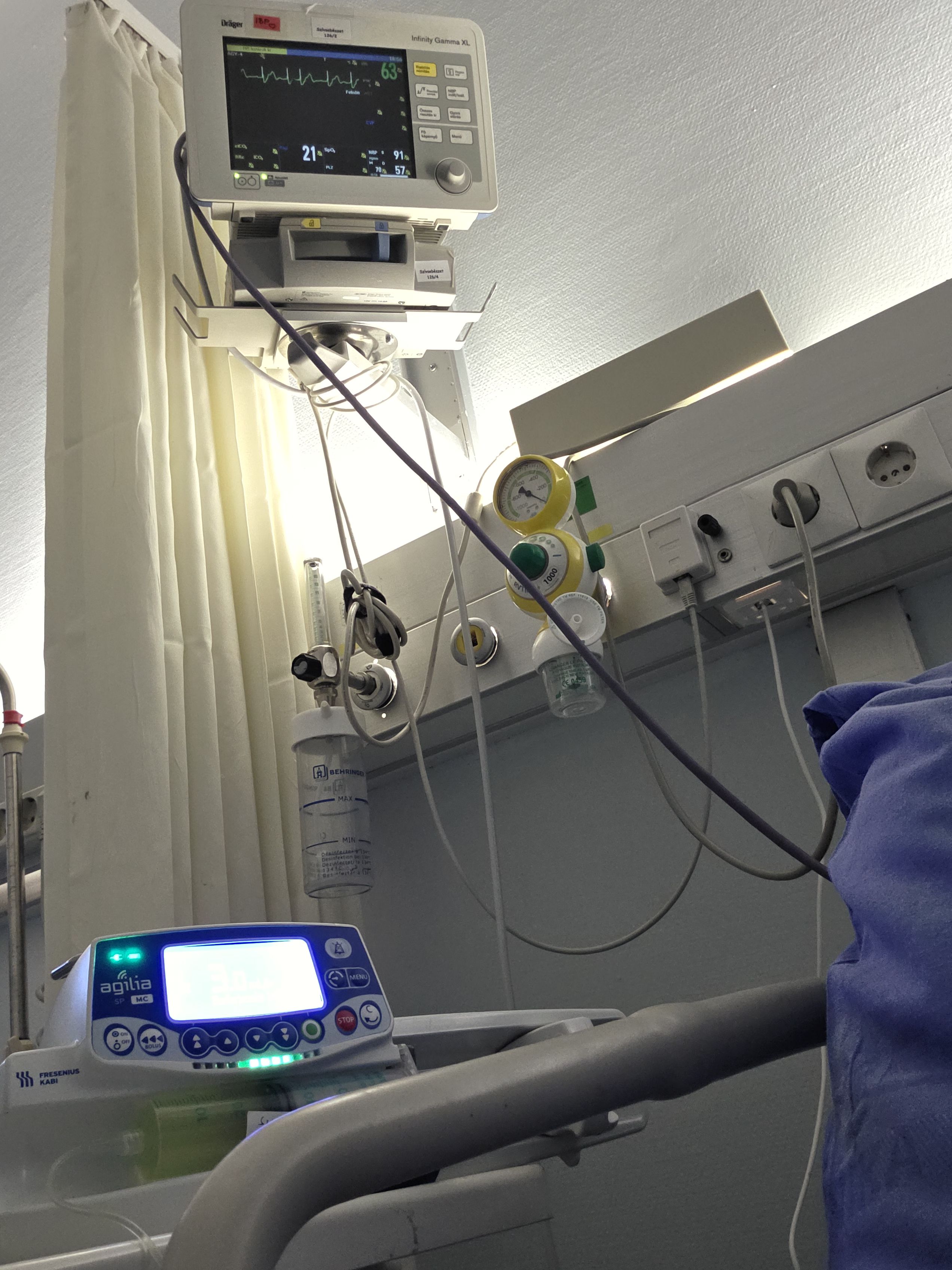
Mereven fekszem az oldalamon, háttal az eseménynek, amennyire az ereimbe csepegő sárgás folyadékot vezető cső engedi. Jobbomon a vérnyomásmérő félóránként fújja fel magát, 88/55. Ágyhoz vagyok kötve két napra.
Doktornőm ajánlására szombaton befeküdtem a klinikára egy terápiás kezelésre. Szintaxot, egy szíverősítő gyógyszert kapok, amit lassan adagol a készülék. Felkelni ez idő alatt nem lehet – legfeljebb egy biliszékig felállni, annyira alacsony a vérnyomásom, és lekapcsolódni a gépekről sem egyszerű. Kibírom. Bízom benne, hogy a készítmény eléri a hatását, pár hétig, a műtétig talán jobb állapotban tartja a szívem.
Nagyon bízom benne, hogy érezni fogom a változást. Már egy kevés is sokat jelent ilyenkor.
Hétvégémet itt töltöm, a „Mátrix osztályon” – a bolondok házában –, ahogy a nővérke viccesen nevezte.
Három férfi van még rajtam kívül a kórteremben, itt figyelik, monitorozzák a szívünket. Mindenkinek meg van a saját története.
Sok a beteg. Egyik követi a másikat. Egy napos beavatkozásokra jönnek. Erősítők, érfestés, infarktusok, és minden más, ami észrevétlenül elromlik az emberben. Elkeseredettek, sokan reményvesztettek, hogy az idő betegségeket hoz, hogy kirántotta őket a kényelmes életükből. Hallgatom a párbeszédeket. Van bennük szidalmazás, fájdalom, harag, de remény is, bizalom a szakemberekben.
Most menekülnék innen, de nem lehet.
A fülembe üvölt az Are you ready for… – Katy Perry hangja. Egy könnycsepp legurul az arcomon, végig a kopott, kék bolyhosra mosott ágyneműn, olyan ijedt és tehetetlen vagyok.
Mellettem egy hetvenkét éves férfit igyekeznek ritmusba hozni. Tartós pitvarfibrillációja van. Többször átesett már hasonló beavatkozáson. Ő is meglepődött, hogy a kórteremben végzik egy függönnyel elválasztva a többiektől. Mellettünk sokkolják a szívét. Ezt megelőzi egy nyeléses ultrahang, megtudják van-e vérrög a szívében, mert ha igen, nem sokkolhatják. Persze mindehhez kap egy kis bódítót. Feltehetően több szempontból is egyszerűbb volt az orvosoknak helyben megoldani.
De nekem, akinek saját defibrillátora van a testében, minden ilyen gondolat rettegést kelt.
Szerencsére van nálam egy füles, így nem kell hallanom az egészet. Maximumra húzom a hangerőt. Nem tart sokáig. A szemem sarkából látom, ahogy kivonulnak az orvosok, ápolók. Kikapcsolom a zenét, és hallom a monitor hangján, hogy már sokkal lassabban, rendezettebben pittyen a szívhangja.
Magához tér. Örül, mert végre jobban érzi magát. Délután haza is mehet – mondják.
Talán nem véletlenül történt így. Tudnom kellett, hogy amitől annyira félek, átvészelhető, nem is annyira rossz, mint amennyire rettegek egy ilyen sokktól, a szív újraindításától.
Ezek az események pár óra, nap leforgása alatt történnek meg itt, a kardiológián. Csak a beavatkozásig tartják a beteget. Mihelyt lábra áll, kicsit jobban van, és nem tudnak mit kezdeni vele terápiásan, mehet is haza.
Azt látom, hogy nagy szükség van rájuk.
A testet javítják. Ezer hála nekik!
De mi lesz a sok sérült lélekkel, akik átélik ezeket a traumákat?
~•~•~•~•~•~•~•~•~•~
Heart Strengthener
A wall gone grey with grim0e. White tiles up to the sink. Beneath it, a wobbly trash bin. On the other side, a cream-colored curtain separates me from my neighbor. That’s all I can see.
I hear much more. I pull myself inward.
I lie stiff on my side, my back turned to everything that’s happening—as much as the tube carrying the yellowish fluid dripping into my veins allows. On my right arm, the blood pressure monitor inflates every half hour: 88/55.
I am confined to the bed for two days.
On my doctor’s advice, I was admitted to the clinic on Saturday for a therapeutic treatment. I’m receiving Sintax, a heart-strengthening medication, administered slowly by a machine. I’m not allowed to get up during this time—at most to a bedside commode—my blood pressure is so low, and even disconnecting from the machines is not simple.
I endure it. I trust that the medication will take effect, that for a few weeks, until the surgery, it might keep my heart in a better state.
I truly hope I will feel the change. Even a small improvement means a lot at times like this.
I spend the weekend here, on the “Matrix ward”—as one of the nurses jokingly called it.
There are three men here besides me in the room. They watch us, monitor our hearts. Everyone has their own story.
There are many patients. One follows another. They come for one-day procedures.
Strengthening treatments, angiography, heart attacks—and everything else that quietly breaks down inside a person. They are desperate, many have lost hope, as time brings illness and pulls them out of the comfort of their lives.
I listen to the conversations. There is cursing, pain, anger—but also hope, trust in the professionals.
Right now, I would run away from here—but I can’t.
In my ear, I hear “Are you ready for…”—Katy Perry’s voice. A tear rolls down my face, across the worn, blue-striped hospital bedding. I feel so frightened and helpless.
Next to me, they are trying to bring a seventy-two-year-old man back into rhythm. He has persistent atrial fibrillation. He has undergone similar procedures several times. He, too, was surprised that it’s done right here in the ward, separated from the others only by a curtain.
Beside us, they shock his heart. Before that, they perform a transesophageal ultrasound to check if there is a clot in his heart—because if there is, they cannot shock it. Of course, he receives a light sedative.
Presumably, for several reasons, it was simpler for the doctors to handle it on the spot.
But for me, who has a defibrillator in my own body, every such thought fills me with fear.
Luckily, I have an earbud in, so I don’t have to hear everything. I turn up the volume to the maximum. It doesn’t last long. From the corner of my eye, I see the doctors and nurses leaving.
I turn off the music, and through the sound of the monitor I hear that his heartbeat is now much slower, more regular.
He comes back to himself. He’s happy—he finally feels better. They say he can go home in the afternoon.
Maybe it didn’t happen by chance.
I needed to know that what I fear so much is survivable—that it’s not as terrible as the terror I feel at the thought of such a shock, of restarting a heart.
These events happen here, in cardiology, within hours, within a day. Patients are kept only until the procedure. As soon as they can stand, feel a little better, and there’s nothing more to be done therapeutically, they are sent home.
I see how much they are needed.
They fix the body. A thousand thanks to them.
But what about the many wounded souls who live through these traumas?

Hozzászólás